“Be yourself; Everyone else is already taken.”
— Oscar Wilde.
This is the first post on my new blog. I’m just getting this new blog going, so stay tuned for more. Subscribe below to get notified when I post new updates.
“Be yourself; Everyone else is already taken.”
— Oscar Wilde.
This is the first post on my new blog. I’m just getting this new blog going, so stay tuned for more. Subscribe below to get notified when I post new updates.
I am an Online Distance Education Student, which means I do not have classes to attend, I live too far from the University, and I therefore am reliant on my text books, Whatsapp groups with other students doing the same modules as me, lecturers’ messages and posts on-line and tutorials that i find on internet. In a way, my time is more my own, but that can be a disadvantage, because if you are not very dedicated and strict with yourself, you get into a situation where you do not keep up with the work and have an overload of work when it comes to preparing for exams. On the other hand, there are no tests to write and your marks are made up of only assignments and end-of-semester module exams.
Well, the year is almost done. I have two more assignments to hand in and then it’s full-time studying for exams. I am at this point having a bit of a struggle understanding some concepts in Statistics, although I have a private tutor, he is also busy and can’t really give much individual time, so I am relying on some on-line tutorials. This is in preparation for one of my assignments, but will help in the exams, too.
Until these past two assignments are done I don’t have time for much else, which is I suppose why they are scheduled for after the week holiday, but then does a student ever really get a holiday? Only if we make time for it ourselves. Going on a field trip earlier in the year, pretty much excludes the possibility of any other holiday for me until the end of the semester, though. But the reward will be worth it when I graduate.
Tutoring of other students is my main source of income at the moment and I find it helps me tremendously in understanding, interpreting and learning the work I am doing. I suppose that finding easy ways to explain concepts helps imprint those concepts in the mind and deepens the understanding. And of course, I get paid to do it! That’s a bonus.
Well, that’s enough chatter, let me get back to work. Check ya later!!
For those of you who are interested in such things, environmental management at Unisa has an elective module of Archaeology. As a lot of my interests coincide with Heritage, human studies and the history of the environmental problems on the sites which I am interested in working on, I thought this would be a good opportunity to learn something about how we determine what people did in the past and then try and tie that into the work I am doing.
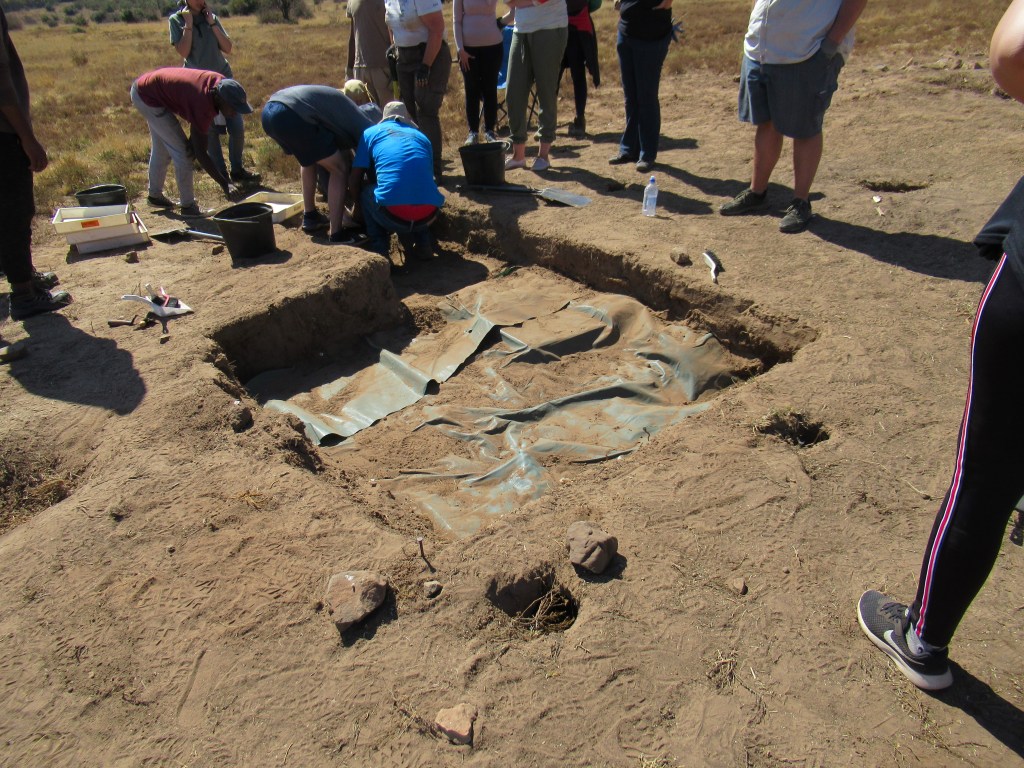
Therefore, when Unisa offered the chance to go on an archaeology dig I jumped at it. I was there last week and we were excavating the site of a mission station that existed in the Free State over 200 years ago. Besides finding the usual and expected animal bones, charcoal, ceramics, local pottery, glass, building material such as brick, the occasional buttons and plenty of beads, we also found the metal remains of wagons.
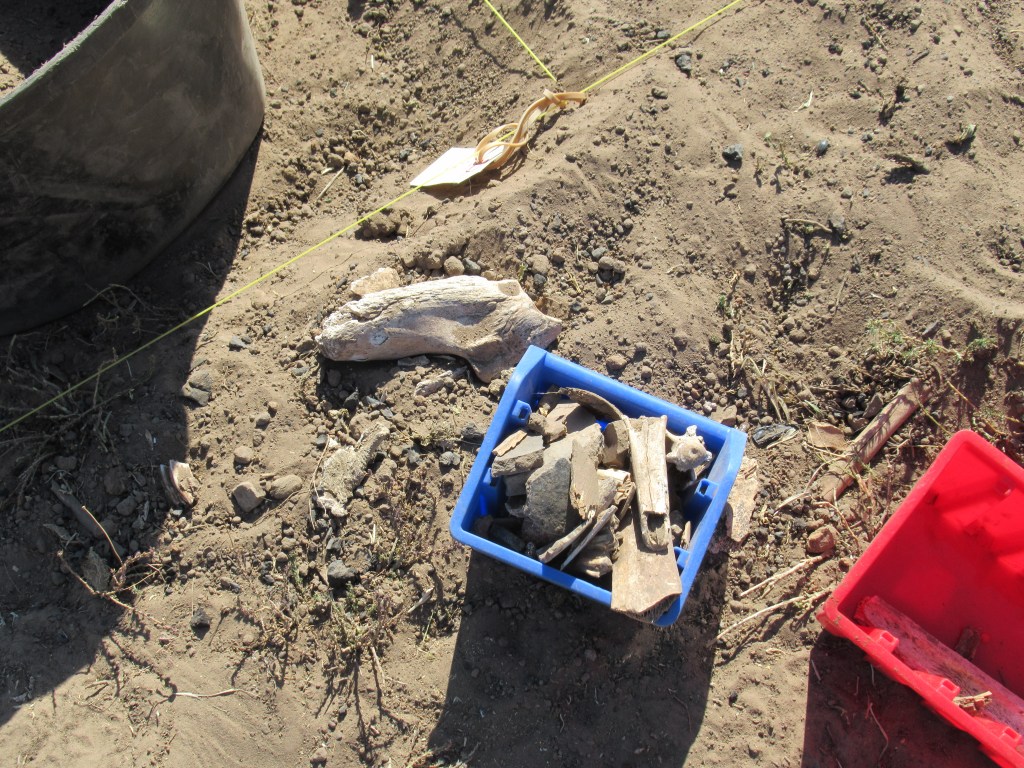
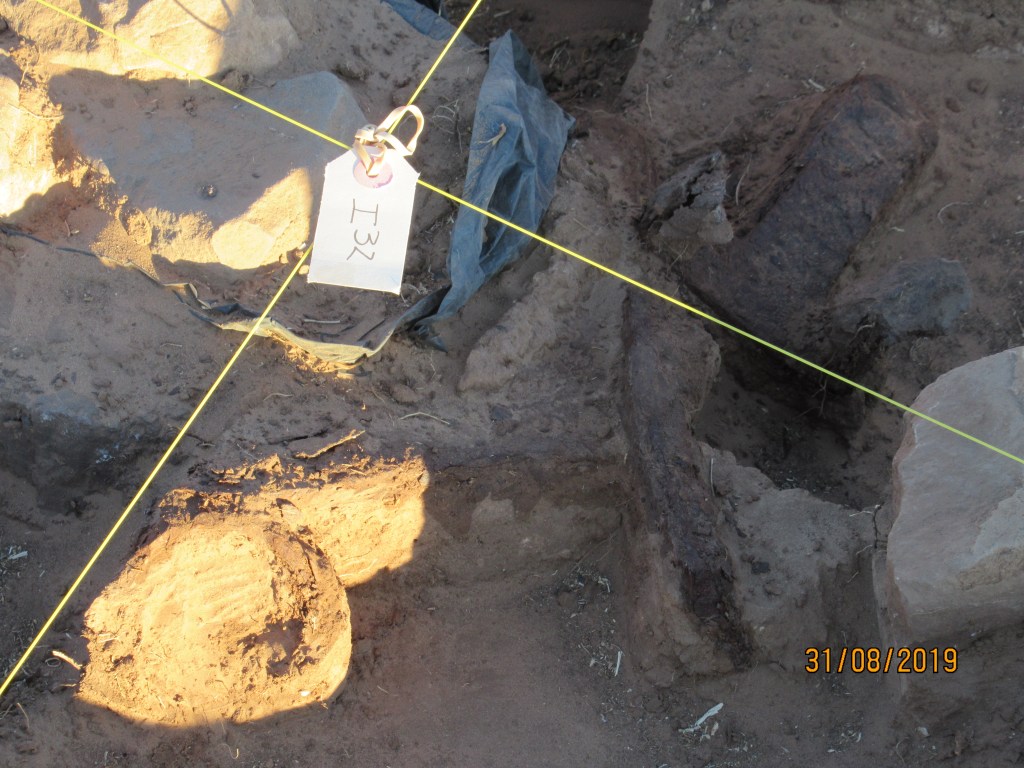
The outline of structures were there, such as that of the church, some rocks that would have been used to make the kitchen enclosure, next to which I was working in the midden, and other scattered foundation stones which would have been used in other structures such as the missionary’s house and schoolroom, etc. However, much of the stone foundations we suspect were removed and plundered since the closure of the mission.
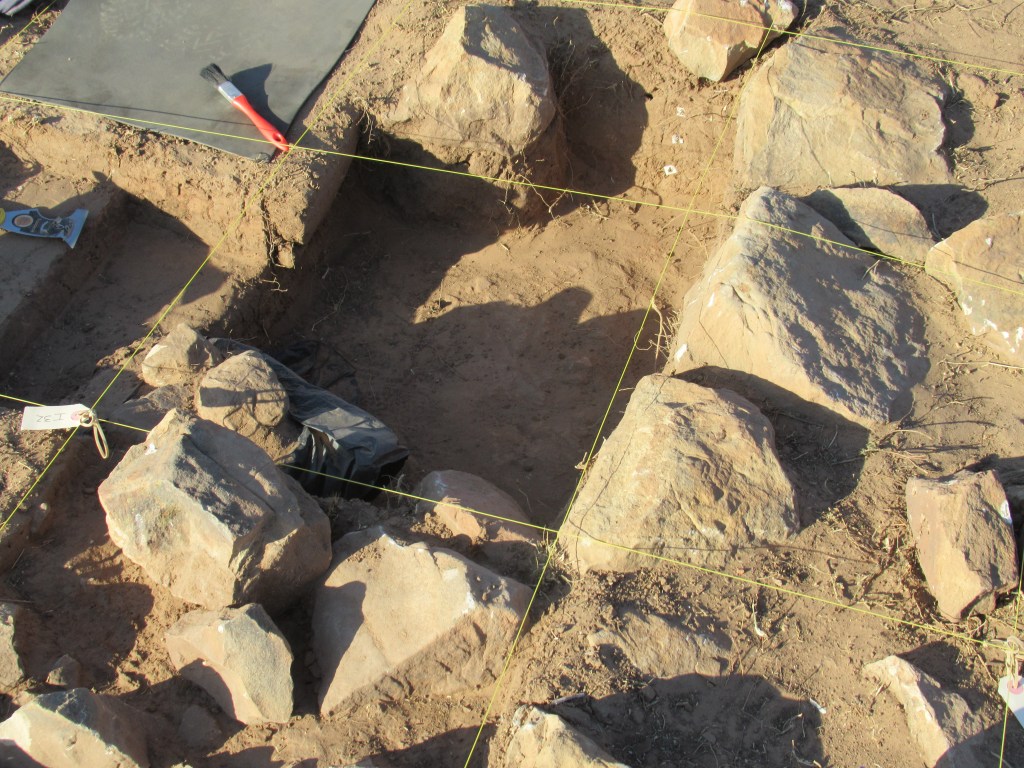
All in all, I learnt a lot about identifying remains, how they are removed from the soil and processed and classified, marked and stored. I will definitely enjoy going on a dig again if I get the opportunity. It was hard work but great fun and the group was great to work with.
So that’s what I was doing last week and why I haven’t been on-line. Hope you weren’t too disappointed.
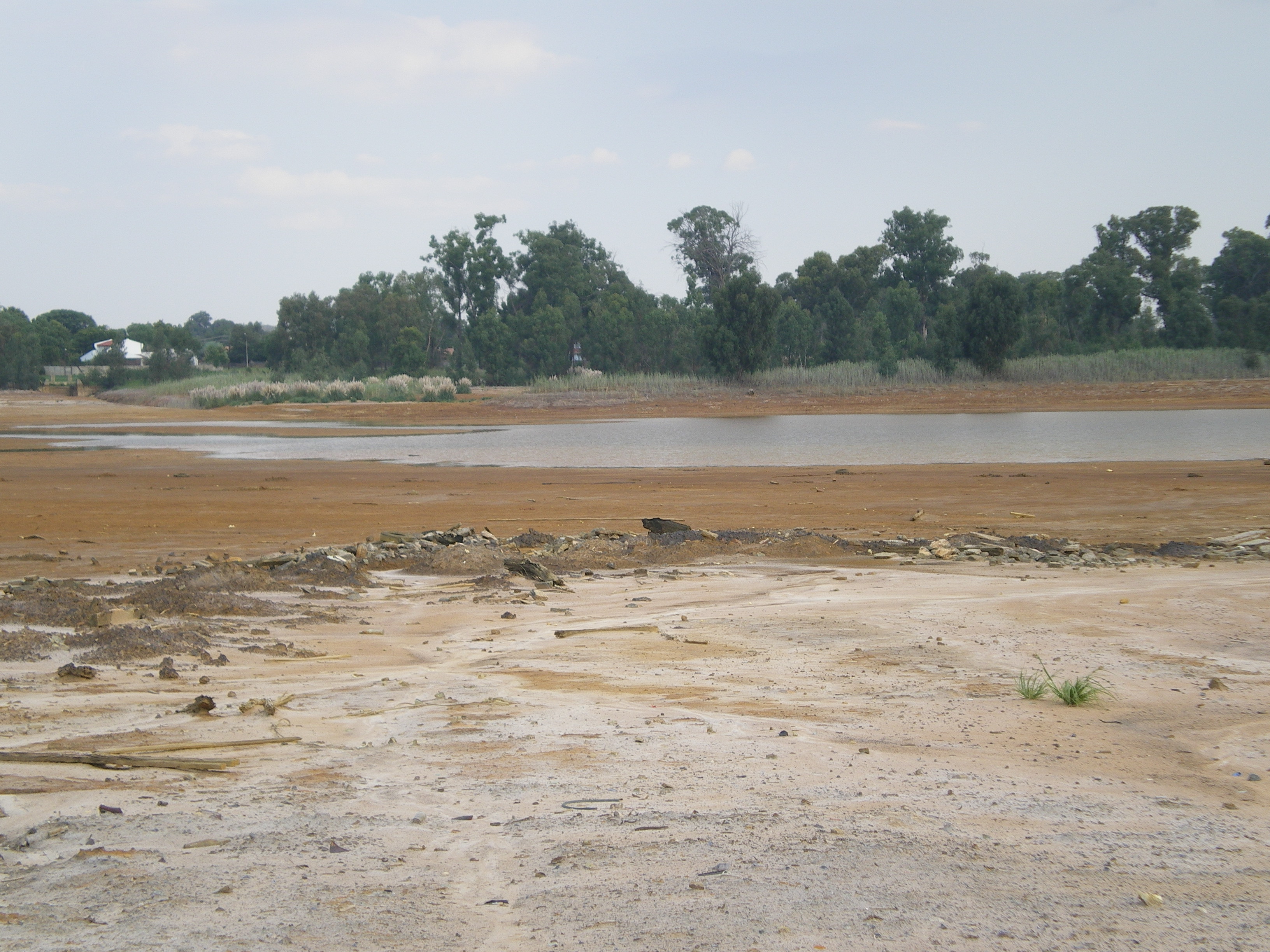
Uranium content 16mg/l, 220 times the accepted limit of 0.07mg/l or the natural content found in water being 0.0004mg/l. Other chemicals found are Cobalt, Cadmium, Aluminium, Arsenic, Lead, Nickel and Uranium. Uranium and Cadmium are particularly bad health risks. The pH of the water in the lake is 2.6, highly acidic.
There is no sign of life, birds or insects, anywhere around the area. It is a barren landscape. There are local people living close by and they walk past the lake, fetching their wash water every day, completely ignorant of any risks they may be exposed to.
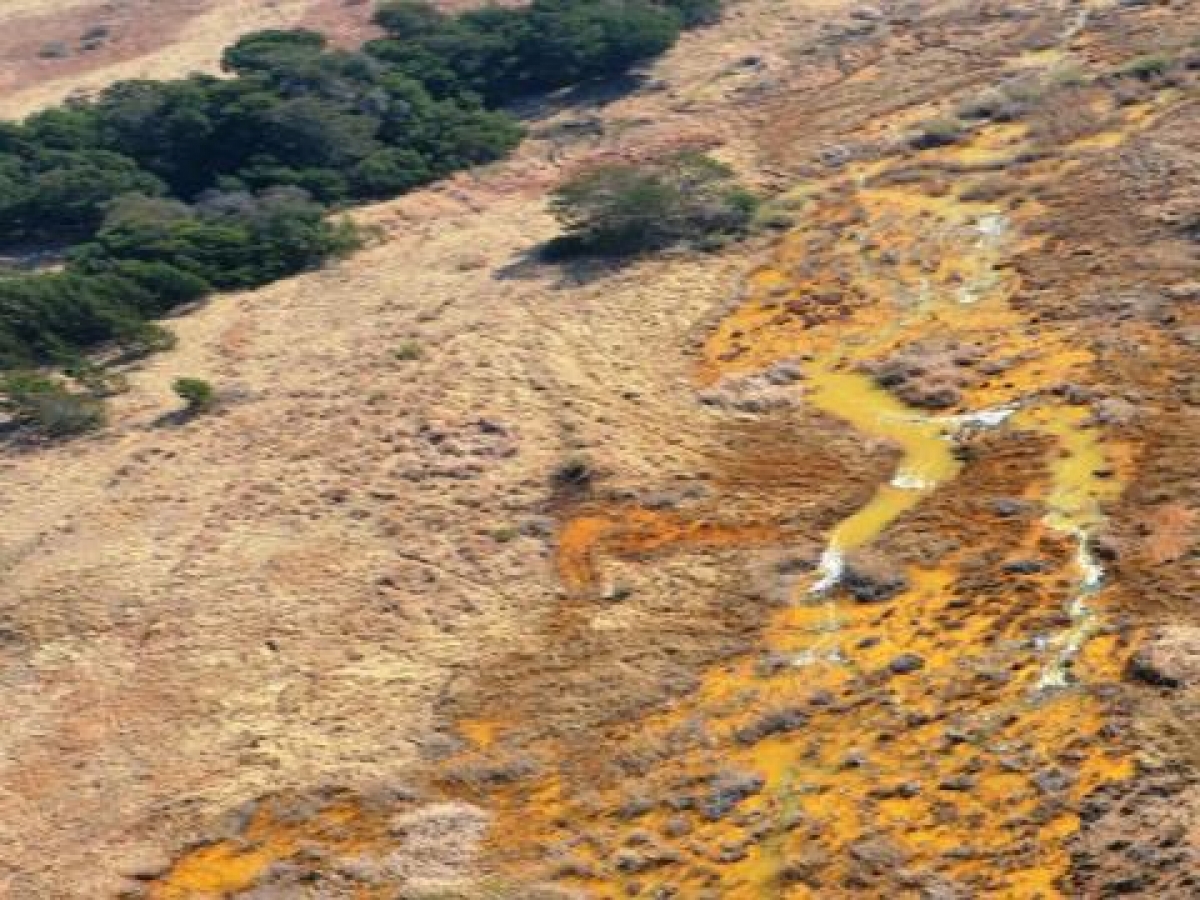
In 2002 the NNR has declared the lake a radioactive area, where it was once a tourist attraction frequented by residents and visitors alike as a resort for fishing, picnicking, even a dance hall, several bars and a jetty etc.
In 2016 there was no sign of the fencing and warning signs keeping people away from this toxic area.
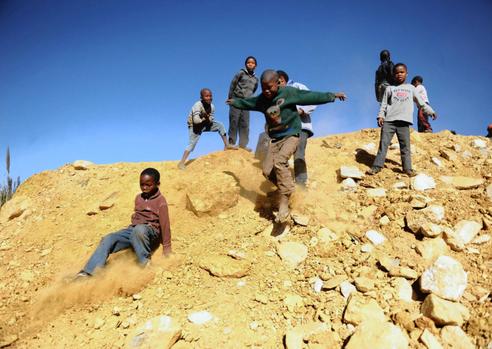
A study done, cited the extremely high uranium content in a 6 year study: The Cost of Gold: Environmental, Health and Human Rights Consequences of Gold Mining in South Africa’s West and Central Rand, by Harvard Law School’s International Human Rights Clinic.
Residents of nearby Robin Park and Bhongweni are affected medically having severe respiratory symptoms, rashes and cancer as uranium levels collect in the kidneys, lungs and brain and also affect the endocrine system.

A submission by a group of civil society organizations, including the Centre for Environmental Rights, ground work and the Centre for Applied Legal Studies, to the UN Human Rights Council, in preparation for its Universal Periodic Review – South Africa, stated how the environmental and human damage done by mining violates the human rights of many communities across the country. The Federation for a sustainable Environment has done a lot of work in bringing the situation at Robinson Lake into the limelight and getting people’s attention to improve matters. The mines have set up treatment facilities which at least partly treat the water from the mines, but even this is not a complete solution, as it leaves behind all the sulfates, which are also harmful.
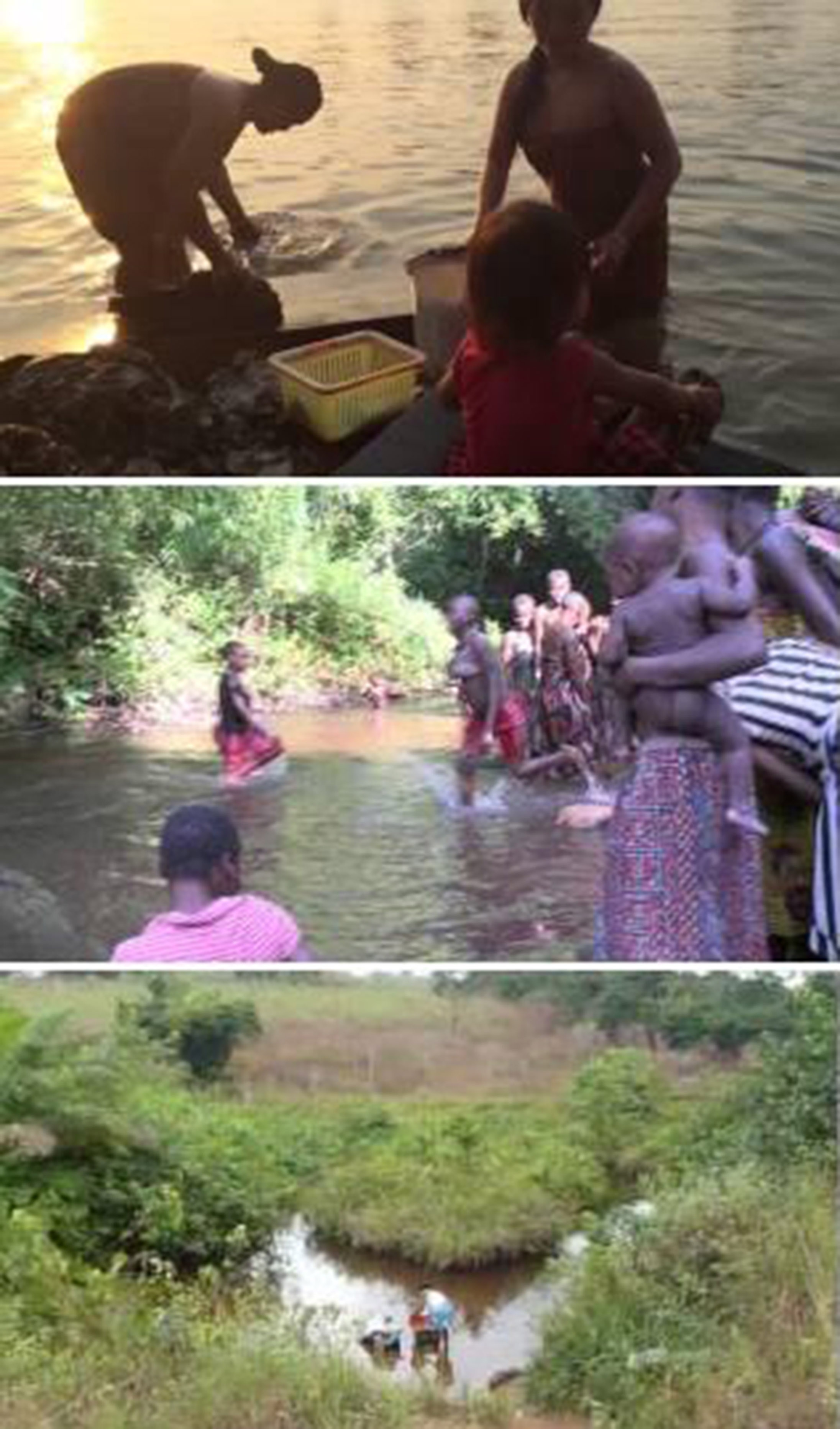
This unfortunately affects the poorest and most vulnerable communities, and especially those suffering from HIV/AIDS with their weakened immune systems. They also have to make use of the water for their cooking, drinking and washing, as they are the ones that live closest to the deserted mines. Although they say they stay away from the water, they really have no choice as they do not have other water sources nearby and since the mine houses were abandoned, there is no water supply to them either.

All communities of South Africa are affected by heavy metals contamination to some extent, because of eating food that has been affected through the plants and animals we eat. All our water systems have some level of contamination from mining and other contaminants. Even the ground water is contaminated to some degree through seepage of the contaminated water through the ground. This water is then used by farmers from their boreholes to water crops and livestock, eventually getting into our own food and water. There are also many communities using water not cleaned and treated by water treatment facilities who are getting the contaminated water direct from surface water sources such as rivers and dams.
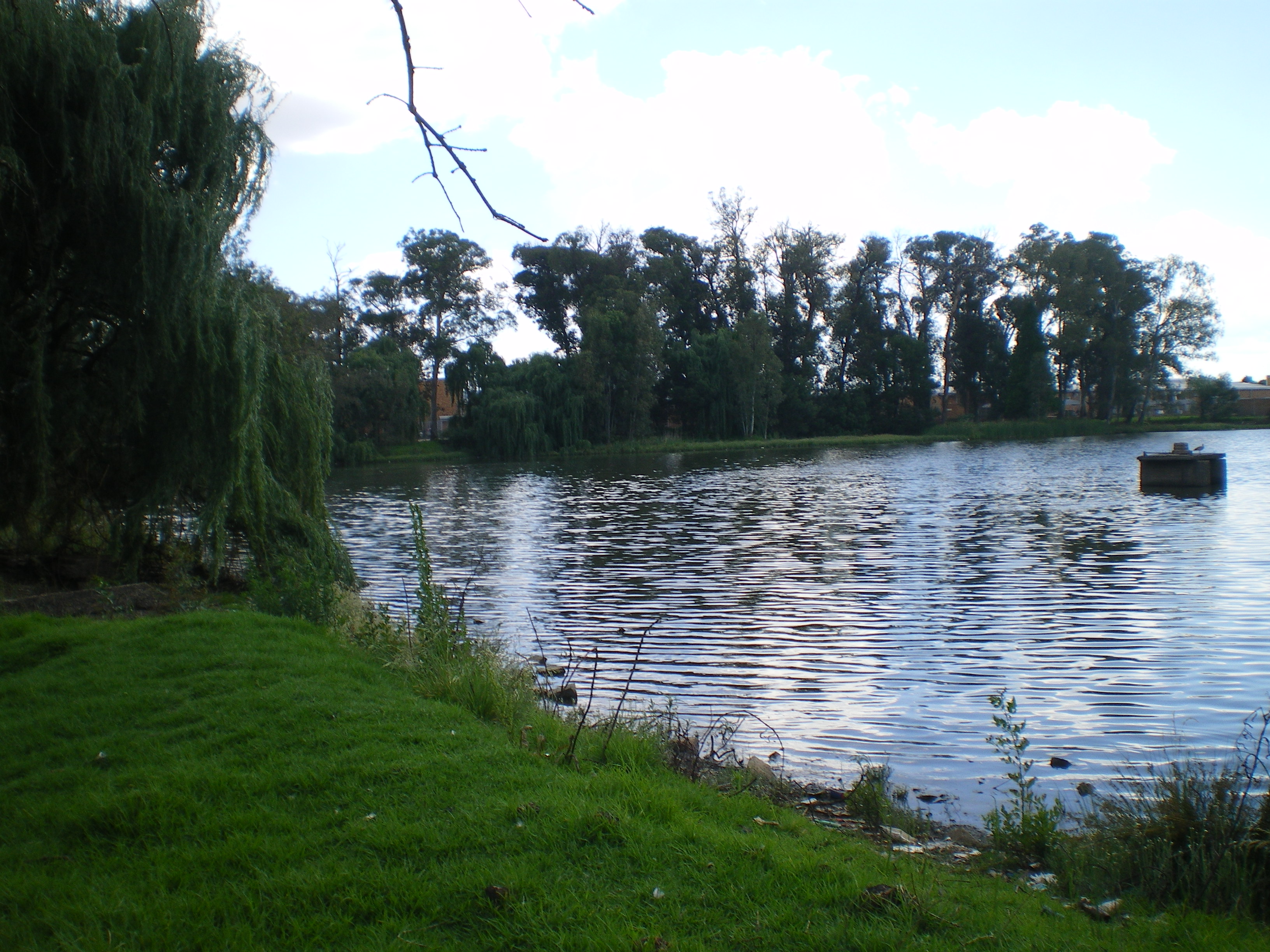
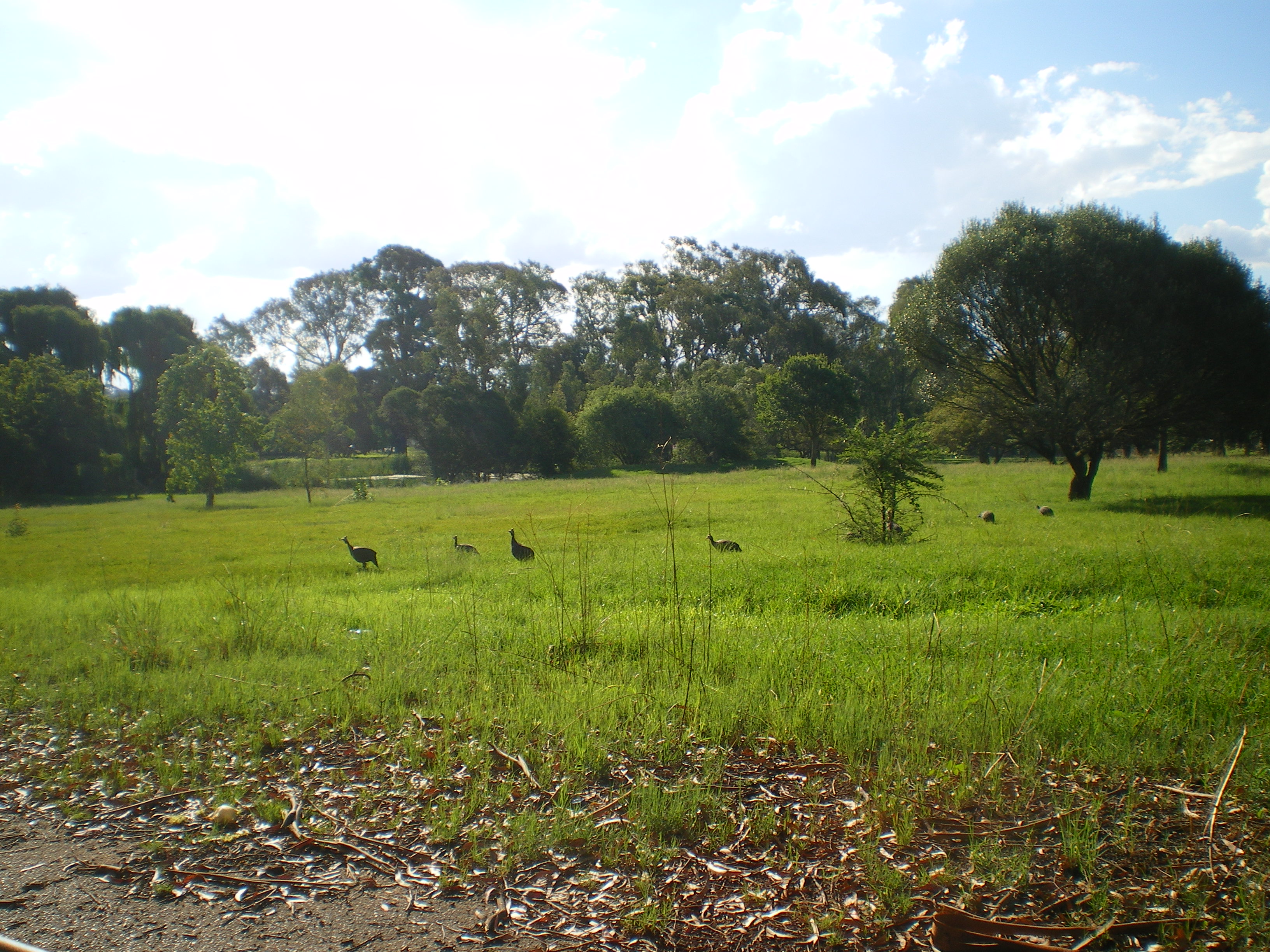
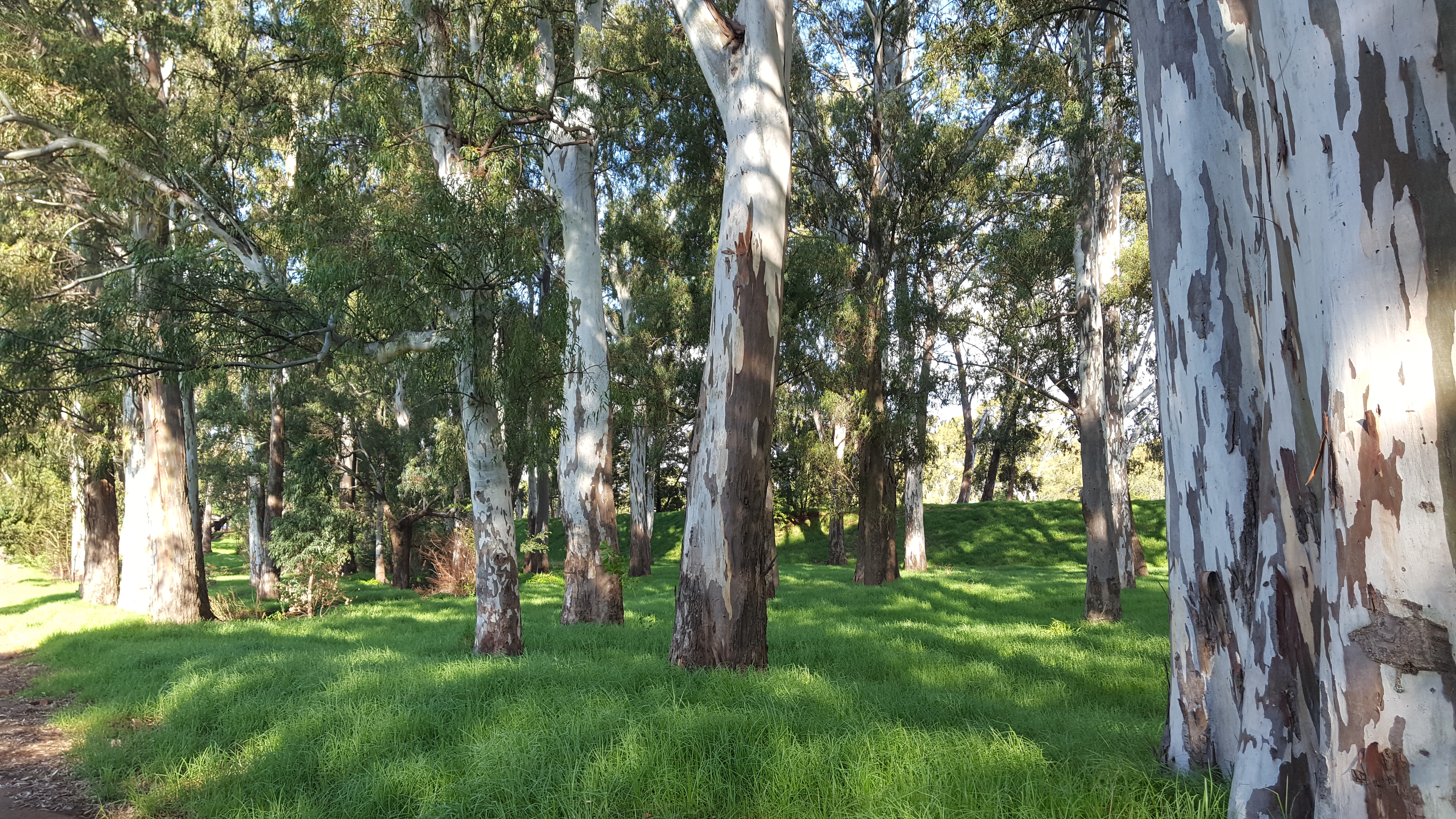
Riebeeck Lake, in Greenhills, Randfontein, was once a pristine park where families could go and enjoy a picnic, a day fishing, kids playing on the roundabout and slides, etc. The bird calls are beautiful and peaceful and there are plenty of shade trees. You could almost fool yourself into thinking you were in Central Park in New York.
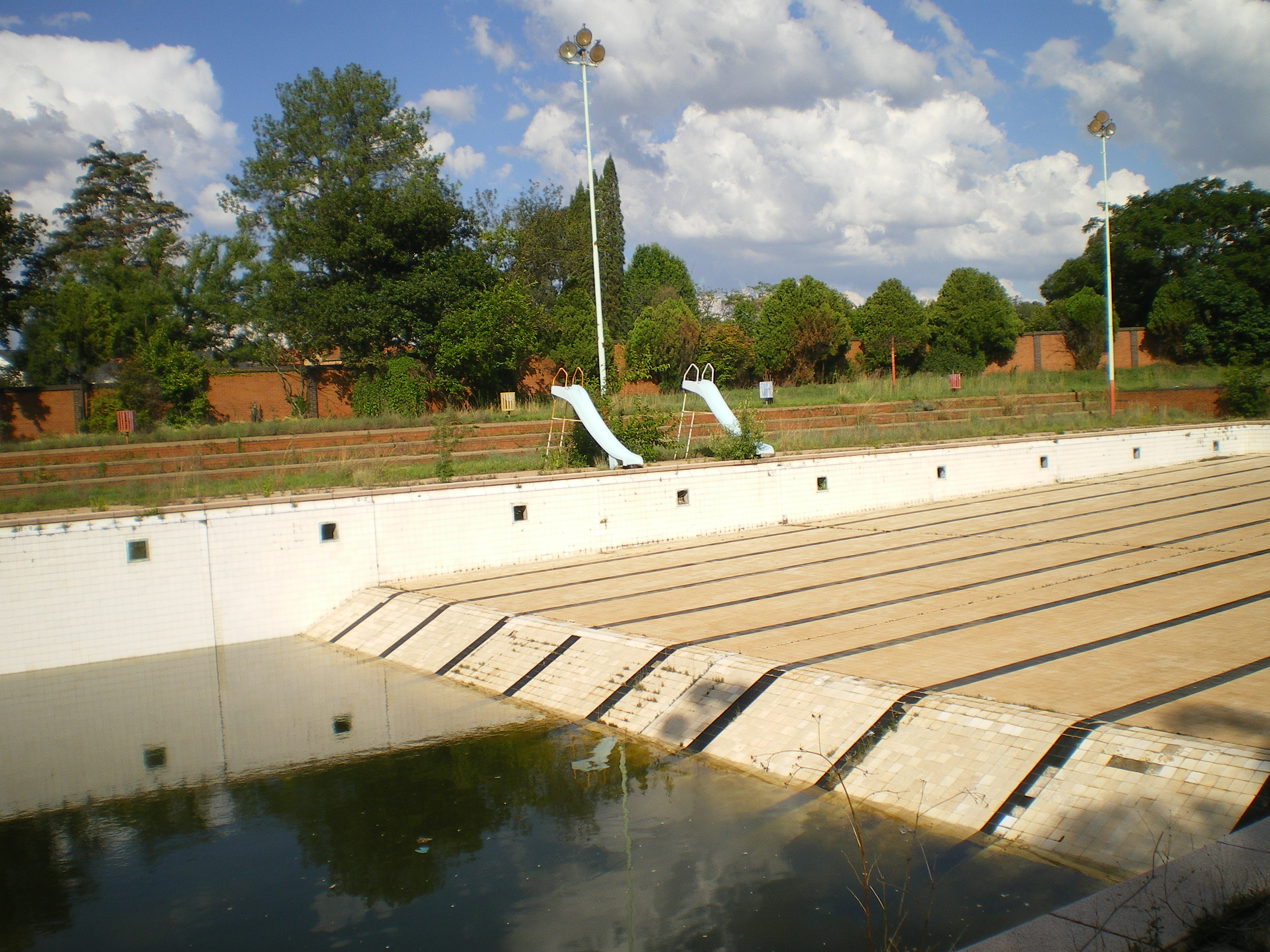
Several years ago, there was even an Olympic size swimming pool where swimming clubs used to regularly come and swim against our team in gala’s. The pool is now in terrible condition, has only some dirty rain water in and the tiles making up the flooring of the pool is broken up with weeds growing through them. There are also some of the paving bricks around the pool that are broken and even a small tree growing through. The pool is now a danger to people as it is open and anyone can get to it and fall in and drown in the water.
There were also facilities for a caravan park, fishing and even a nursery with plants for sale. The Heritage site ‘Die Jonkershuis’ is also in terrible condition. It was built in 1859 and used to be regularly visited by interested parties. However, now the front door has a tree blocking it and people are using it to sleep is. They have also erected temporary zinc shacks and utilize facilities from the house.
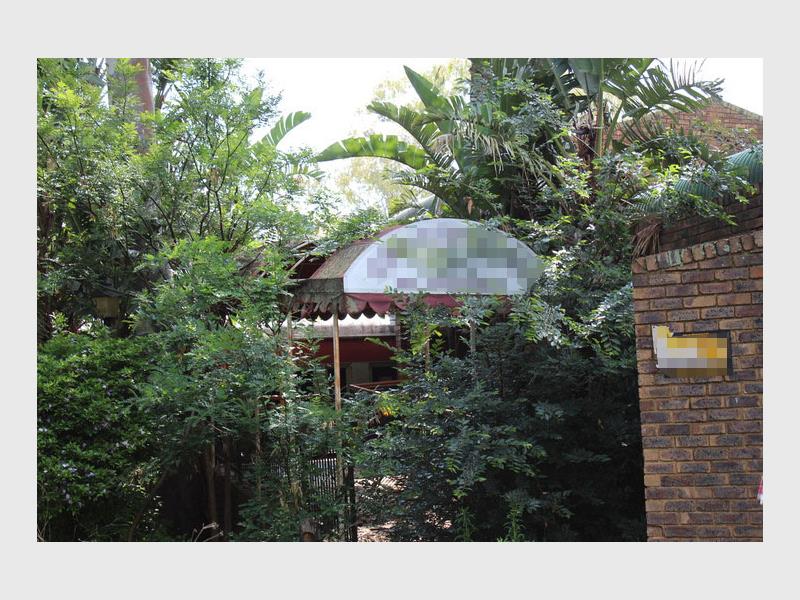
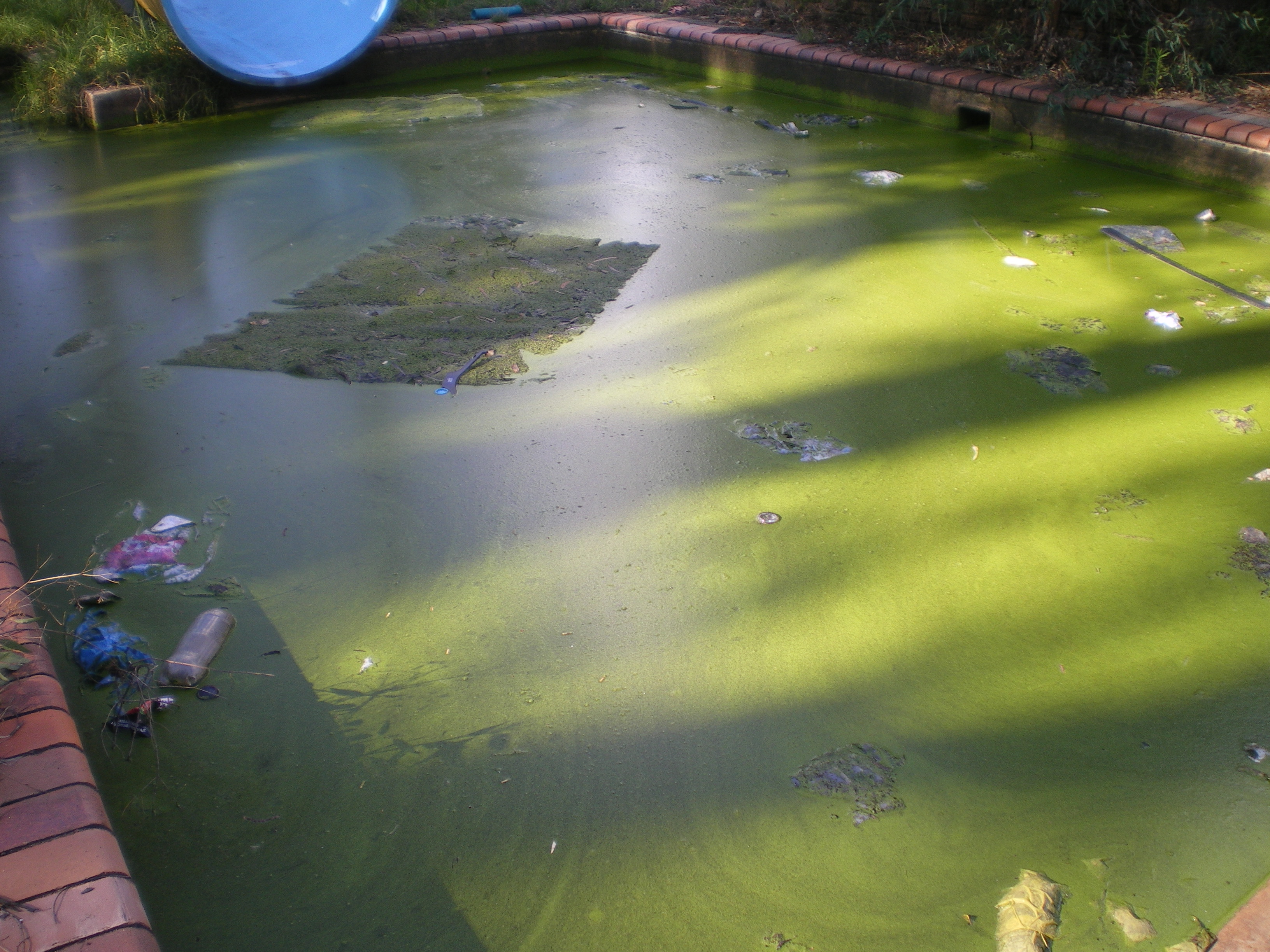
However, when you look at your surroundings in more detail you see the rubbish lying around, the long Khaki-bos with blackjacks sticking to your clothes. On a bad day, when the wind is in the right direction, you can also smell the sickening smell of sewage and algae coming from across the road at the Greenhills stream. One of the pools that the slide would have emptied into, is also thick with green algae caused by sewage and pollution.
It is also dangerous to be at the dam, although we haven’t had as many attacks there recently since the fencing has been put up, but there is still easy access to the area.
This is a question I think other people should answer about me, rather than myself, because other people always have a more honest assessment of a person, but I hope I can do this topic justice.
I am a realist in general and passionate and stubborn. My initial training is as a nurse, and I still do nursing privately for people who need home assistance, like the disabled and elderly when the family is working or cannot cope alone. However, my passion is for the environment and I think it needs as much assistance, if not more than the sick and elderly people I help.
I am currently, and have been for a while now, studying environmental management, science, ecology and waste management. I am also doing various research projects on grassroots bio-remediation and rehabilitation of old mining sites where the environment has been badly damaged due to mismanagement and neglect on behalf of the companies responsible.
Another big interest of mine is rescuing farmlands and restore the health of the land and prevent desertification through agroforestry and forest gardens.
Why do this?
I will be keeping you updated on the investigations I am currently working on, new places I go to (from an environmental and personal point of view), discussing my studies and researches and sharing any articles I publish, academic or otherwise.
I hope to share my interest and passion with you and ignite your passion about these subjects too, and if I do that and you would like me to concentrate on something specific, I would love to hear from you, or if you have any comments about what I’m doing and writing, good or bad. (I’m not scared of criticism and believe I can only learn from my mistakes, so feel free to point them out.)

