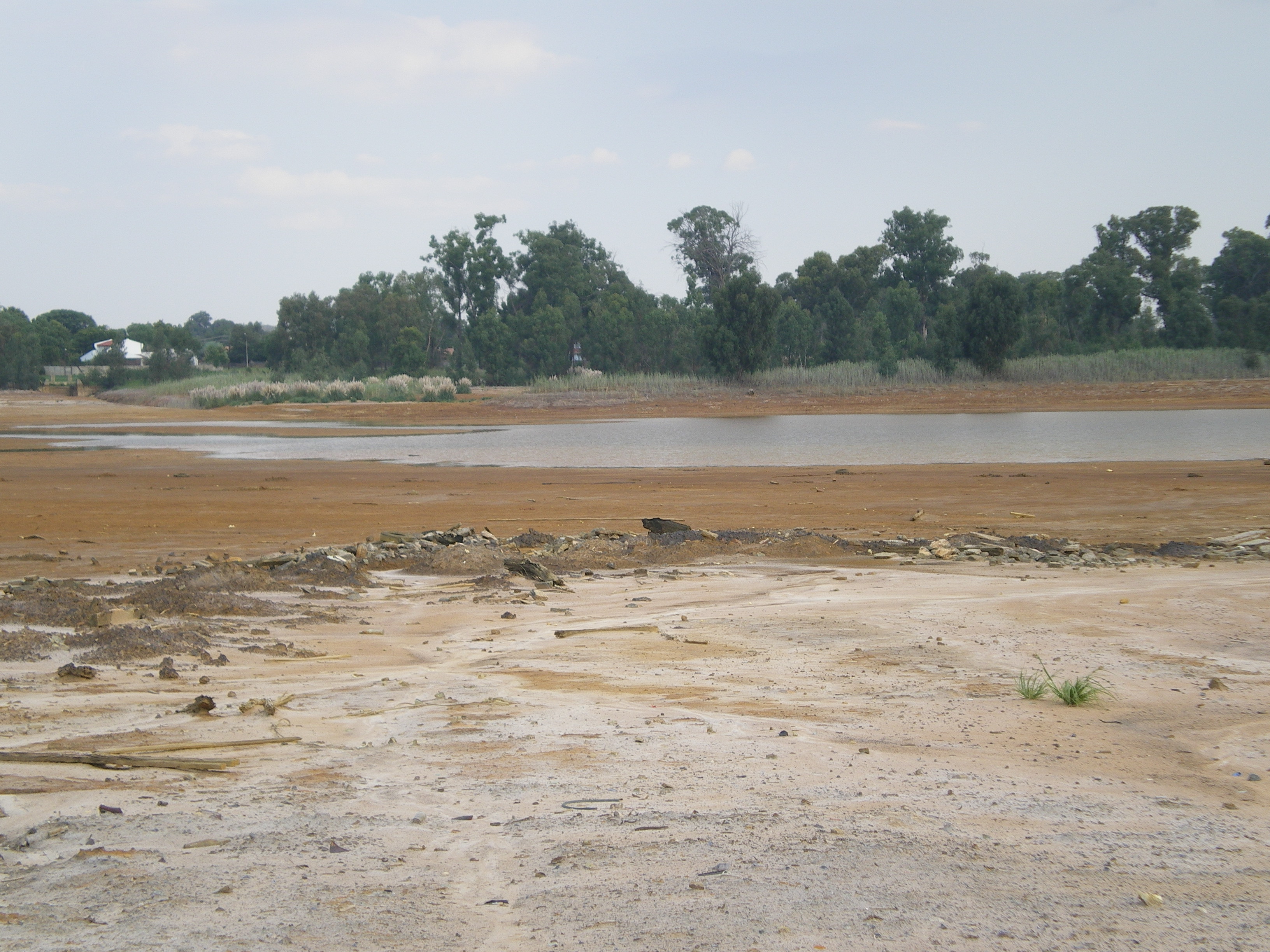
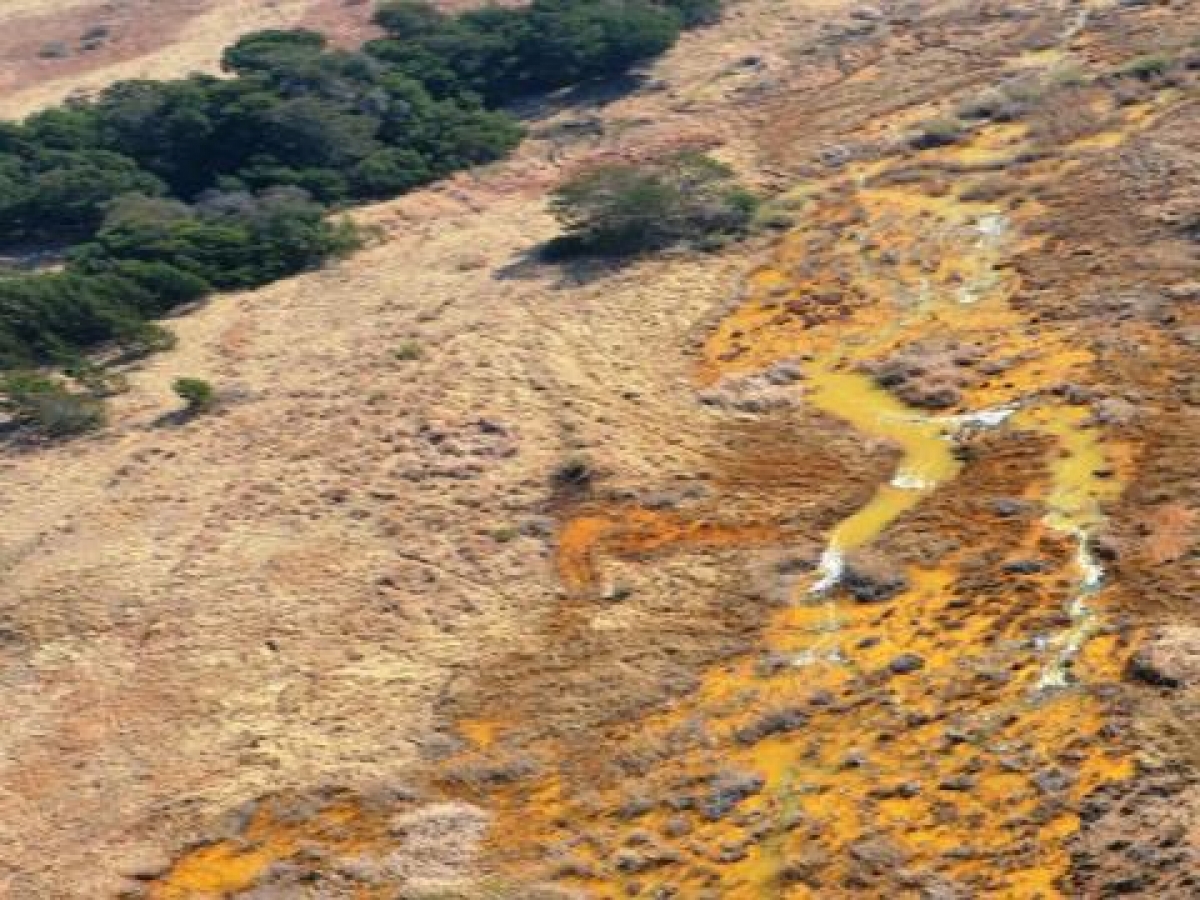
Uranium content 16mg/l, 220 times the accepted limit of 0.07mg/l or the natural content found in water being 0.0004mg/l. Other chemicals found are Cobalt, Cadmium, Aluminium, Arsenic, Lead, Nickel and Uranium. Uranium and Cadmium are particularly bad health risks. The pH of the water in the lake is 2.6, highly acidic.
There is no sign of life, birds or insects, anywhere around the area. It is a barren landscape. There are local people living close by and they walk past the lake, fetching their wash water every day, completely ignorant of any risks they may be exposed to.
In 2002 the NNR has declared the lake a radioactive area, where it was once a tourist attraction frequented by residents and visitors alike as a resort for fishing, picnicking, even a dance hall, several bars and a jetty etc.
In 2016 there was no sign of the fencing and warning signs keeping people away from this toxic area.
A study done, cited the extremely high uranium content in a 6 year study: The Cost of Gold: Environmental, Health and Human Rights Consequences of Gold Mining in South Africa’s West and Central Rand, by Harvard Law School’s International Human Rights Clinic.
Residents of nearby Robin Park and Bhongweni are affected medically having severe respiratory symptoms, rashes and cancer as uranium levels collect in the kidneys, lungs and brain and also affect the endocrine system.

A submission by a group of civil society organizations, including the Centre for Environmental Rights, ground work and the Centre for Applied Legal Studies, to the UN Human Rights Council, in preparation for its Universal Periodic Review – South Africa, stated how the environmental and human damage done by mining violates the human rights of many communities across the country. The Federation for a sustainable Environment has done a lot of work in bringing the situation at Robinson Lake into the limelight and getting people’s attention to improve matters. The mines have set up treatment facilities which at least partly treat the water from the mines, but even this is not a complete solution, as it leaves behind all the sulfates, which are also harmful.
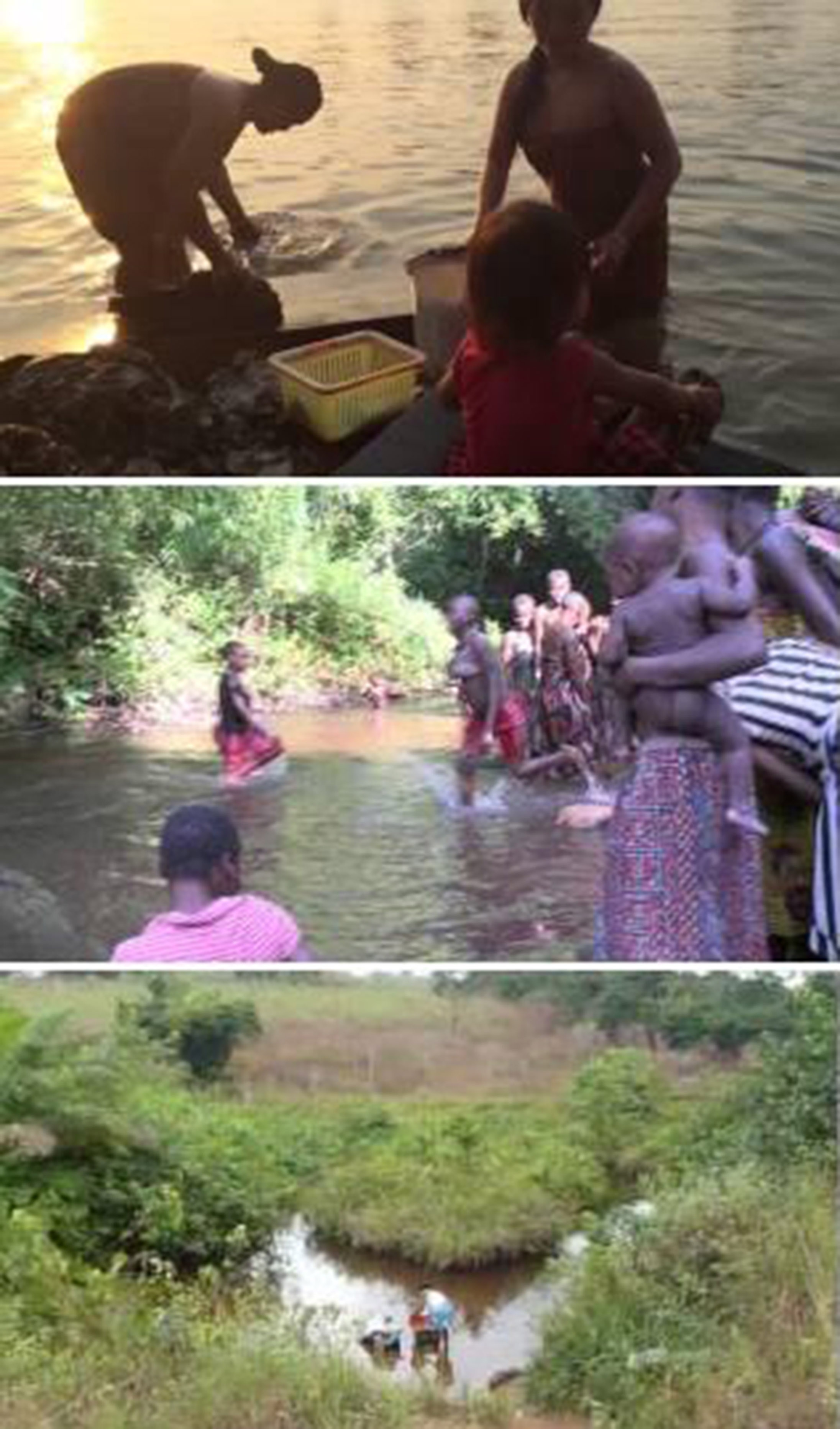
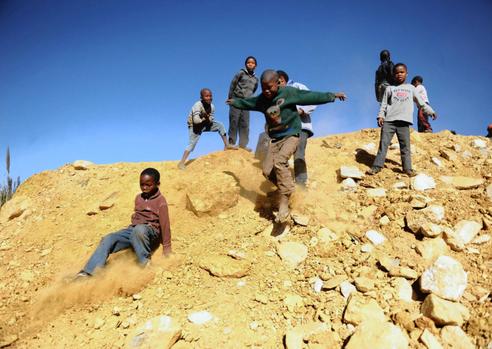
This unfortunately affects the poorest and most vulnerable communities, and especially those suffering from HIV/AIDS with their weakened immune systems. They also have to make use of the water for their cooking, drinking and washing, as they are the ones that live closest to the deserted mines. Although they say they stay away from the water, they really have no choice as they do not have other water sources nearby and since the mine houses were abandoned, there is no water supply to them either.

All communities of South Africa are affected by heavy metals contamination to some extent, because of eating food that has been affected through the plants and animals we eat. All our water systems have some level of contamination from mining and other contaminants. Even the ground water is contaminated to some degree through seepage of the contaminated water through the ground. This water is then used by farmers from their boreholes to water crops and livestock, eventually getting into our own food and water. There are also many communities using water not cleaned and treated by water treatment facilities who are getting the contaminated water direct from surface water sources such as rivers and dams.


